Pottery & Ceramics
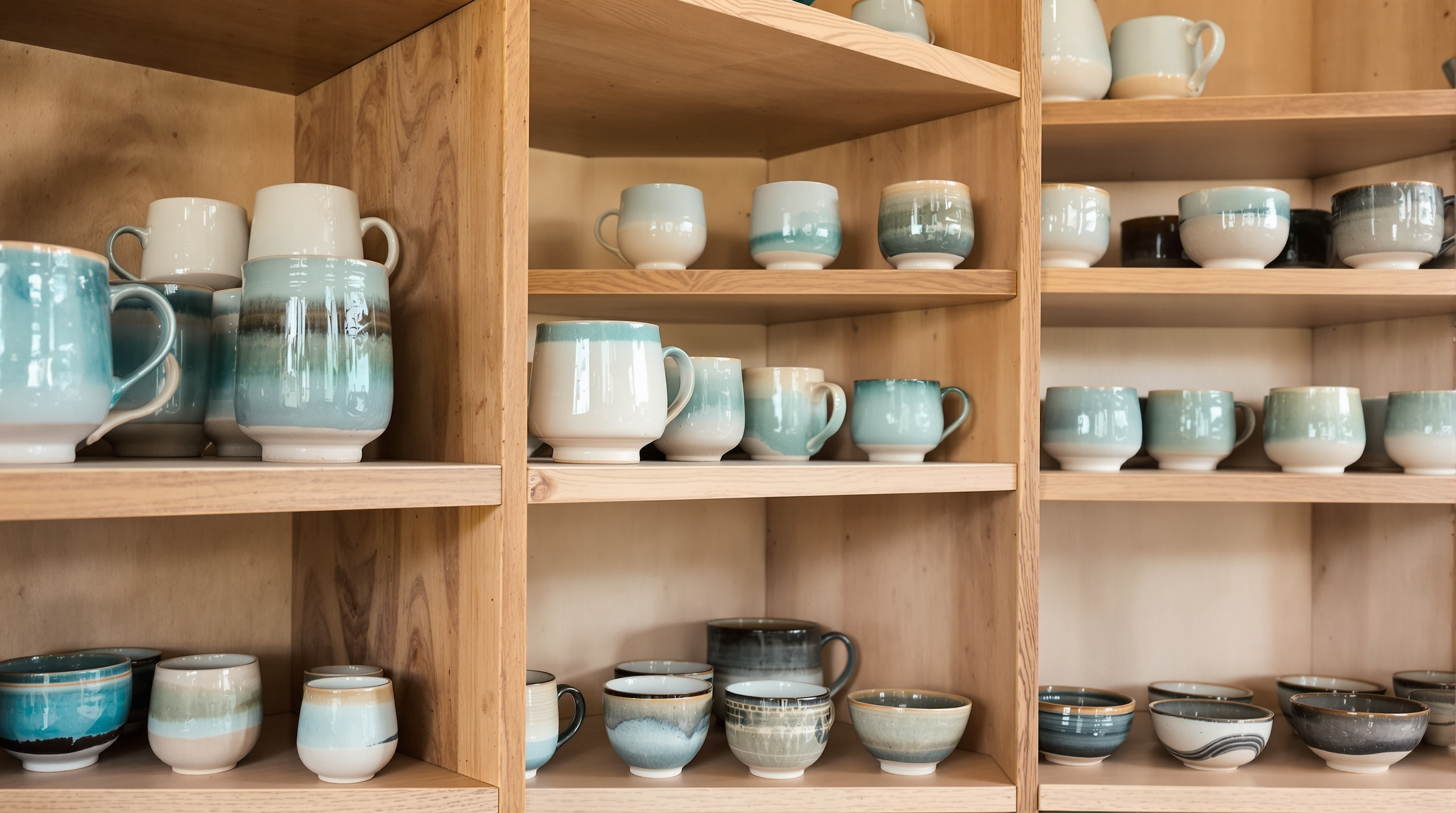
Studio pottery rewards a close look at form, finish and feel. Hand-thrown stoneware has a warmth that mass production can never match: the slight wobble of a wheel-thrown rim, the way a glaze pools and breaks over a curve, the satisfying weight of a mug that fits your hand exactly.
What You'll Find
Studio pottery comes in a range of forms and finishes. Mugs are the perennial favorite — the kind you reach for every morning until it becomes your mug. Bowls run from tiny ring dishes to generous serving pieces. There are vases for a single stem or a fistful of wildflowers, platters made for the center of the table, and everyday pieces like spoon rests, berry colanders and butter dishes.
Glazes Inspired by the Coast
Coastal-inspired glazes can echo the island: sea-foam greens, deep harbor blues, sandy creams and the warm browns of marsh and driftwood. Because glaze chemistry reacts differently in every firing, no two pieces are identical — each carries a one-time-only pattern born in the kiln.
How to Choose Pottery That Lasts
- Pick it up. Handmade pottery should feel balanced and comfortable. Trust your hands.
- Check the foot. A well-finished base sits flat and won't scratch your table.
- Ask about use. Most studio stoneware is food-safe, microwave- and dishwasher-friendly — but it's always worth confirming with a piece's maker.
- Choose pieces you'll use. The best pottery isn't displayed; it's lived with.
Caring for Handmade Stoneware
Treated kindly, good pottery lasts for generations. Avoid extreme temperature shocks, and hand-wash your most treasured pieces to keep glazes bright. To learn more about ceramic traditions, the Smithsonian American Art Museum holds a rich collection of studio ceramics worth exploring. When you're ready, see how pottery fits into the wider gift guide or return to the shop overview.